Saturday, 4 October 2014

The Blog Fantastic 028: Dragonwriter: A Tribute to Anne McCaffrey and Pern review


I’ve been a fan of Anne McCaffrey since my early teens. For a few years after high school I fell out of touch with her and her writing because I discovered comics full force and that consumed my free time for a while. I’ve actually had the pleasure of rediscovering her Dragonriders of Pern series when I started writing The Blog Fantastic project here on the blog. Even though I’d discovered things about her writing that I don’t like, I’ve really enjoyed immersing myself in the world of Pern all over again. It’s been one of my favourite science fiction and fantasy settings since I read Dragonsdawn. It’s not just the setting or dragons or other interesting science ideas that make her writing interesting to me and hundreds of thousands of other readers. McCaffrey has a knack for weaving interesting and meaningful themes in her work and populating her stories with engaging characters. There are characters in Dragonriders of Pern that I like as characters but dislike as people because she writes them so well.

Anne McCaffrey passed away on November 21, 2011 at the age of 85. That was during the time when I had read one of her novels in at least three years but I was saddened by the loss of one of my youth’s favourite writers. I’m usually not one to feel overly saddened when a celebrity (author, actor, director, etc.) dies. I usually feel sad and sorry for their family but this one, like few have before, hit me where it hurt. That’s one of the reasons I picked up Dragonwriter. I wanted to read something that wasn’t by McCaffrey but about her. I know there are at least two biographies out there but something strictly biographical wasn’t exactly what I had in mind. I wanted something that would discuss her as much as it would also deal with the importance of her writing. I didn’t know that’s what I wanted at the time but after reading Dragonwriter, I realise that I had an itch for that exact book but I doubt I would ever have been able to say so in so many words or in any great detail.

My feelings and my reaction to this book are all over the place. There is a lot of good stuff and a bit of bad but mostly it feels very genuine as the people who contributed clearly cared a great deal about McCaffrey and her work. Instead of blabbering on for pages, I’ll try and keep this short but I need to impose some obvious structure to this review. Below are quick summaries of the articles and tributes collected in Dragonwriter and some of my thoughts on the ones I enjoyed the most.

Anne McCaffrey, Believer in Us by David Brin
McCaffrey was a science fiction writer, no a fantasy writer (more on this later). One of her great themes found in the Dragonriders of Pern series is humanity's conscious effort to better itself. By always looking toward the future, we progress and that's what fuels most of the characters in Pern. 

Why Are You Reading This Stupid Shirt? By Share Lee and Steve Miller
This article is anecdotal in nature (the first of many). Lee and Miller tell the story of their friendship with Anne which revolves around convention visits and correspondence. We get to see McCaffrey as a fan and as a supporter of other science fiction authors. Lee and Miller aren't specifically celebrating McCaffrey's professional achievements, though there is certainly some elements of that, they focus on the personally and professionally results of their friendship with McCaffrey. 

Star Power by John Goodwin
A short article about McCaffrey's continued involvement in supporting budding science fiction authors, specifically with the L. Ron Hubbard the Writers of the Future program. This is the second article where mention is made of McCaffrey's crazy scooter driving skills in her later years. It's a hilarious mental image.

How the Dragonlady Saved My Life by David Gerrold
A long-time friend of the family, David Gerrold tells the story of how McCaffrey provided him with emotional sanctuary in a time where he needed it most. The experience taught him how to roll win the punches and keep moving forward.

Bookends by Robert Neilson
Neilson recounts moments in his life when he got to see firsthand just how professional, fun and, more importantly, generous McCaffrey could be. Family and friends meant a great deal to her and she always made the effort to help other when they needed it.

Lessons from Lessa by Elizabeth Moon
Moon is the second contributor to argue that Pern is science fiction. One of her arguments is Lessa. She was a unique female character archetype that, at the time of Pern’s first story didn’t exist and is still an interesting character today. Interesting, fully fleshed out female characters didn’t exist in other genres. Especially not in fantasy where they were often sideline characters or objects of desire. I enjoyed the snippets where she mentions the ways in which McCaffrey resembled some of her characters.

Flying in New Directions by Robin Roberts
This is a very interesting essay on McCaffrey's literary impact on the field of science fiction. Unsurprisingly, a lot of this is rooted in her being a female novelist and dealing with many feminist themes. That's not all though, in addition to using these themes in her work, McCaffrey's books were popular and sold very well. That invariably contributed to the influence of her writing on generations of writers. I particularly enjoyed how Roberts made the association between traditionally female arts, poetry, song and weaving them in her stories in ways that made them important to the books in questions. Pern’s survival depended on the use of traditionally female arts.  

That’s not all, by writing about women and their bonds with dragons, McCaffrey was able to address a wide range of women's issues: relationship, sexuality, social influence and power, etc.

Roberts, like many articles so far, also mentions McCaffrey's generosity but in a different context. McCaffrey co-authored several books with up-and-coming female novelists who often later developed into critically acclaimed authors. Some of those authors who've benefitted from McCaffrey's generosity, friendship and guidance have contributed to this book: Sharon Lee and Steve Miller, Elizabeth Moon, Lois McMaster Bujold, Mercedes Lackey, and Elizabeth Ann Scarborough. 

Modeling the Writer’s Life by Lois McMaster Bujold
Bujold writes about her career and how it was modelled, subconsciously or not, after McCaffrey's. It might seem obvious for an aspiring writer to have done so considering she grew up reading McCaffrey's body of work but it's an engaging insight into writers and their literary influences. McCaffrey also influenced some of Bujold's life decisions. In short, this essay is about the effects of modelling yourself after another person and to make sure you model yourself after the best kind people there are: like McCaffrey who was a worthy example to follow both as a professional writer and matriarch of a loving and supporting family. 

All the Weyrs of Pern by Wen Spencer
Fan fiction (or fan fiction) can be a hot topic for some people. Some professional writers have stated their disapproval of fanfic, arguing that it's bad practice for budding writers and it's also a breach of copyright. I'm of the opinion that it can be a great teaching tool for aspiring writers, especially genre writers because it allows you to focus on the structure of a story without having to worry about world building. Like anything else, relying solely on that kind of writing can likely also stilt a writer’s growth. Spencer deals with this idea in her essay. It's interesting to learn about her development as a writer, guided by her understanding of McCaffrey's Pern novels and the opinion and support of friends. For all of the criticisms you can make of fanfic, it's clear that it can have a beneficial impact on genre writers. Spender exemplifies that and her story is interesting on more than one level. 

The McCaffrey Effect by Jody Lynn Nye and Bill Fawcett
A retrospective of organized Pern fandom. The writers of the article make the link between Pern and McCaffrey's fans and what exactly it was about her work that inspired people to reach out with similarly minded people and create a space (real and, later on, vitural) for themselves to share in their common interests. 

The Ships that Were by Mercedes Lackey
Yet another article of a writer who has collaborated with McCaffrey and learned a valuable lesson (or several) in the process. Lackey presents an interpretation of McCaffrey's worldview and how she used that to good effect in her The Ship Who Sang stories. I’ve never any of them but it’s described as a dystopian setting that was different due to McCaffrey's approach to intentionally avoid wallowing in the self-pitying stories of dystopian fiction. In other words, dystopia with a positive twist. Lackey also integrates the real-world origins of this dystopian future in the social realities of the daily lives of disabled individual as it was during the 60s and 90s (the time the stories were written).  Unlike many science fiction writers who focused on the technological, McCaffrey focused on the social and projected that to the future to form a dystopian setting for her stories.

The Dragonlady’s Songs by Elizabeth Ann Scarborough
It was just a matter of time until I reached an article that would focus on music and its importance to both McCaffrey and her work. Scarborough discussed at length on the meaning of music for McCaffrey's novels and she also compares the sources of inspiration for the author. There are also some insightful comparisons between the real world teaching ballads and those found in the Dragonriders of Pern.

Religion on Pern? By Richard J. Woods
Writes about McCaffrey's connection to religion and the role it played in her fiction and her personal life. Honestly, it’s not something I’ve ever associated with Pern but after reading this thoughtful tribute, it’s going to be impossible to disassociate the two. I wouldn’t describe McCaffrey as a particularly subtle or nuanced writer but Woods has convinced me that she can be very nuanced when dealing with certain subjects. I’ll be paying attention to this the next time I read one of her novels.

Annie and Horses by Chelsea Quinn Yarbro
A brief tribute to McCaffrey and her love of horses, a love which Yarbro shared. There isn't much more to it but it's nice to have that facet of McCaffrey non-writing related life mentioned in this collection.

Picturing Pern by Michael Whelan
Whelan shares some comps, detailed sketches of cover ideas, for some of his Pern paintings. He also provides some insight as to the mutual beneficial impact he and McCaffrey had on each other early in their respective careers. Dragonwriter gave Whelan the opportunity to illustrate yet another cover related to McCaffrey’s work.

Red Star Rising by Alec Johnson
Johnson, McCaffrey's eldest son, recounts how his mother's support and encouragement has shaped his life. He also shares how her most famous work, the Pern series acted as an introduction to social and environmental activism, something in which is still a big part of his life today.

Changes Without Notice by Angelina Adams
This is an emotionally devastating essay. It brought me near to tears while also putting me in awe at the power of the written word. Adams also writes about the strength she gained from continued friendship with other fans of McCaffrey’s body of work. To say anymore would take away from Adam’s heartfelt and sincere tribute to McCaffrey’s and Pern’s positive and reinvigorating impact on her life.

The Twithead with the Dragon Tattoo by Charlotte Moore
I believe Moore is the youngest contributor to this collection and I think it's great that she was included. For a moment I thought there wasn't going to be a point-of-view from some of McCaffrey's younger fans but there is and I'm thankful for that. Like most other writers who preceded her in this book (that is, if you reading then in order - I haven't quite done that) her life has partially been a result of McCaffrey's influence, through her writing and during chance encounters (virtual and in the physical world). It's also a funny companion piece (in more than one way) to Adams's essay which precedes it. Moore’s tribute also stands out from the rest for being rather hilarious.

The Masterharper Is Gone by Janis Ian
This tribute is reminding me just how many facets people have in their life. They are multiple different people to other people. To Ian, McCaffrey was an older friend and a fellow artist. Their particular bond meant that their friendship was different than the others described in this book. Likewise McCaffrey impact on Ian is also different as it the impact of her death on Ian. What surprised me most about this essay is that it clearly states that the strong, positive, encouraging, kind and downright wonderful woman described in this book also had darker times in her past years. Nothing out of the ordinary mind you (at least not that I could tell from Ian's writing) but self-doubt can be a difficult thing to live with and it helps to have a friend who understands that and offers genuine and honest advice.

Universal Mum by Georgeanne Kennedy
This story ties all of the other ones together. McCaffrey as the Universal Mum. Yup, that works. McCaffrey was many things to many people but those two words someone encompass all of it. 

Todd McCaffrey, Anne McCaffrey’s son and collaborator on several Pern novels contributed the Introduction and the Afterword of Dragonwriter. He also introduced all of the other articles and tributes. Like any anthology or work that has multiple contributors, Dragonwriter has its peaks and valleys. That’s ok though because it’s a very positive book and the contributions that I didn’t enjoy as much were still interesting to read. It’s rather breathtaking to realize just how much McCaffrey has an impact on people around as a person, not just as a writer. I chuckled a bit at all of the mentions in this book that Pern is science fiction, not fantasy. It seems that McCaffrey had an aversion to having her most famous series mislabelled. I’m culpable of that myself as I’ve reviewed a few Pern novels under the banner of my Blog Fantastic project. To me, they're a combination of both genres but if I really had to choose I would invariably say they're science fiction. It’s just convenient for me to list them as fantasy as it gives me an excuse (and some additional incentive) to write about her novels at Shared Universe Reviews. A similar thing can be said of Dragonwriter and McCaffrey’s novels. It doesn’t matter why you read them or what you label them. It’s clear that McCaffrey was and is still an important writer of science fiction and any excuse to take the time to acknowledge that and discuss the impact and influence of her work on several generations of writers and fans is a good excuse. If you’ve ever been interested in McCaffrey of The Dragonriders of Pern, I encourage you to pick up a copy of this book as you’re sure to enjoy this wonderful tribute.

Wednesday, 1 October 2014

Gunpla Build Review: HG RX-79 Gundam VS MS-06J Zaku II


A few months ago I decided to watch one of the series that first introduced me to anime, the massively successful and popular Gundam. In doing so I reviewed a few Gundam series. I have a habit of reading about stuff online while I’m reading or watching it. Naturally, I read a lot about Gundam while watching some of the series and I discovered Gunpla which is equally popular as the TV series. For the uninitiated, Gunpla is a portmanteau for Gundam plastic model which is an accurate description of the hobby itself. As a hobby, Gunpla is about assembling plastic models of mobile suits from all the multiple Gundam series. The models are all, as far as I know, articulated in order to allow builders to pose their models and showcase them in unique ways. While all the models are made from plastic pieces, they come in varying degrees of difficulty, size and, of course, mobile suit models.

It didn’t take long for me to get the urge to order my very own Gunpla kit and to give it a go. The problem is that Gunpla building can be very complex, especially for people who (like me) are new to it. I was able to find quite a few helpful links online that offered good introductions to the hobby. My favourite website is Gunpla 101 by Lauren Orsini. Lauren not only did an excellent job introducing the hobby, she also provides additional tips about how to take care of your models once they’re built, things such as cleaning and repairing broken parts. She also talks about customization, which can be a hot topic for Gunpla builders. What I enjoyed the most about Gunpla 101 is that Lauren and her husband are very inclusive with their hobby. There is no sense of elitism or condescension in their passion for what they love. They’re very encouraging to new or aspiring builders. Lauren and her blog have played a big role in getting me started on my journey to discover Gunpla first hand. If you have any interest at all in building, I highly recommend you check out Gunpla 101 as you’ll find a much better introduction to the hobby than I could ever had written. 

Since I was a complete novice I wanted to start with a lower difficulty model and so HG, or High Grade, seemed like a good place to start. I also wanted my first model to be a Gundam from one of my favourite series so I chose the HG RX-79 Gundam VS MS-06J Zaku II kit. The RX-79 is a simple Gundam compared to many models from later series and it came in a dual kit with a Zaku II which also happens to be a classic mobile suit design. I ordered them along with a Tamiya Basic Tool Set which had most of the tools I would need, along with some I would need to use less often. The kit was a good bargain as its price is equal to that of just the most essential tools (side cutters and a hobby knife).

I worked carefully and meticulously by closely following the tips I had read online. I really didn’t want to screw anything up! The first thing I did was unpack the box and made sure that all the runners that came with the kit where included. Runners are the sheets of pressure moulded plastic which hold all of the parts. They come in different colours based on the kind of model you have. Once I had everything accounted for I started to “read” the instruction manual which is all in Japanese. Thankfully the instructions are accompanied by detailed and accurate illustrations of the parts and how they’re meant to connect together.

It’s helpful that the illustrations are so detailed but it’s still a little bit tricky because a lot of the pieces look similar. Since the models are, for the most part, symmetrical in design you’ll also have nearly identical left and right side pieces. If you’re following the instructions in order and only cutting off the pieces you need for each step you’ll likely not get your pieces mixed up. They’re numbered, a letter identifier indicates which runner the pieces can be found on and the number will indicated which piece on a particular runner. As such, part B-12 is easy to find but cut too many pieces and you’ll soon be closely examining each piece to try and identify it with the illustrations in the manual. 

Overall, it was a very enjoyable experience. I used my fiancée’s cutting mat, which she uses for scrapbooking and making Christmas cards, as my working surface in order not to damage my desk. The tool kit I purchased had everything I needed and more. My only complaint is that the file that came in the kit is too rough to smooth out the excess plastic on the pieces once you’ve cut them off the runner. I will have to try sandpaper with a small grain as I think that would do a better job. For these models I used the hobby knife to slice away the excess. The problem with using the hobby knife is that it sometimes left white marks on the plastic. The red pieces were particularly bad for this as the slicing action caused the plastic to stretch and it created white markings. The light grey colour used for most of the RX-79 didn’t leave much white markings at all. At this point, I think the only thing I would use the file for is to create battle damage if I ever decided to do custom damage on one of my models.

For this model kit all I did was a straight build or sometimes called a simple build which means I put the pieces of the kit together and I did no extra work. One of the wonderful things about Gunpla models, and I imagine plastic models in general, is that creative builders can endlessly customize their Gunplas. You can do this in many ways. There is the aforementioned battle damage which can be used to make really cool dioramas with multiple models by adding more detail and increasing the realism of the scene. Some people also paint their models in different colour schemes or add colours to an existing colour scheme. One of the simplest ways to customize a Gunpla is to trace in the lines on the pieces with a very fine point marker. The marker is often black but other colours are used based on the colour of a specific model. The goal in doing so is to make the details of the model pop and give a model a more realistic, three dimensional look.

I had a great time putting together my first Gunpla models and I’ll certainly be doing more in the future, but I’ll be taking my time. It’s precision stuff and sometimes there are tricky parts to the build but overall it’s very satisfying. It’s also fun to pose them but I have a feeling HG models aren’t the best at this because of their relatively limited articulation. I’d like to experiment with some minor customizations in the future but I think I’m still a ways away from that. I’ll definitively be tracing lines soon, if not on my next model than the one after that. Here are some pictures of the build along with some commentary. I apologize in advance for the quality of the pictures. I did my best but it’s clear I need some practice when it comes to photographing my models.


My first leg! It looks pretty sweet.


Some of these pieces are tiny. The parts of the face that are coloured are stickers.


The completed head. The red portion of the crest was a huge pain to do correctly. The crest is a single piece and it pushes into the helmet part of the head but it’s a tiny fit and pushing into the helmet scrapped the red sticker off the crest. I damaged the sticker so much that the colour was being scratched off and I had to add more red with a marker.


My first ever completed Gunpla! RX-79, you look awesome.


The Zaku’s foot looks so much sturdier than the Gundam’s foot. That’s true of the overall design of both mobile suits. The Zaku looks sturdier while the Gundam is sleeker.


Completed Zaku legs in all their sturdy glory.


Another head only shot to give you an idea of the scale size of the models. They’re not very big.


The Zaku nearing completion. The two different shades of green kind of bug me. I like that there is more than one shade of green but there is too much of a different between the two that it’s kind of ugly to look at.


Both Gunplas fully assembled! The different shades of green don’t look as bad now that the Zaku is completed. It could also be the poor lighting, though. I’m glad I went with the pointy head crest on the Zaku. It looks pretty fierce compared to the RX-79 but that could be because the RX-79 just looks so clean. It’s pretty unrealistic considering the way the Gundams were used in The 08th MS Team. I might need to put some mud on there.


Strike a pose! “Shoot the enemy down” is a pretty common Gunpla pose. Look at the legs, that’s basically the maximum amount of movement they’ll allow. Also notice the left arm with the shield is raise in order to keep the whole thing balanced. The backpack kind of messes up the balance but it looks nice so I keep it on.


If you didn’t like how little RX-79’s legs bend, look at the poor Zaku. He barely has any leg movement. Sturdy, yes, but also stiff.


Final pose for the camera. Bro-bots!

One of the things I enjoyed about building Gunpla is that it forced me to pay attention to the design of the mobile suits. On the surface that might appear to be a silly statement because anybody who’s ever seen an episode with an RX-79 and a Zaku II can name several ways in which they defer in design. However, building them has given me deeper and more detailed insight into their differences and similarities. In other works, I’m not just looking at heads, the colours and the most distinctive design features of mobile suits. I’m looking at the entire thing. I spotlighted the legs above but most parts of these two mobiles suits are different from each other. I like both these models for two different reasons. The Zaku II is just a classic design and it has many unique features. The shoulder shield on one side and the spiked shoulder armour on the other are some of the better examples. It’s also looks very functional and militaristic with exception to the tubes which I think are impractical and obviously weak points of the otherwise sturdy armoured look of the Zaku. 

I also really like the RX-79. It’s an updated version of the original RX-78 Gundam but it has sharper edges and more defined detailing. It looks sleek but it also looks functional. The classic blue and white (or light grey) colours with red and yellow accents are put to good use. In my opinion this is just a nicer version of the original Gundam design but I’ll be quick to point out that might because I’m comparing  the RX-79 model to the mental image I have of the RX-78 which is what I looked like in the 1979 anime. By that I mean the RX-78 looks much softer, with rounded edges and less details which make it look like a weaker mobile suit. I could go on writing about Gunpla and this particular kit because it was just so much fun to build and it also provided some interesting thoughts on the realistic elements of mobile suit design. For anyone else who might be interested in trying out Gunpla building, I’d recommend this kit as I think it served very well as a beginner kit. HG models are challenging without being too difficult and they offer a suitably detailed model once it’s completely assembled. I’d also recommend trying to find two-in-one kits as this was affordable compared to other kits. Gunpla building is a great way to be more hands on with your Gundam fandom and I recommend giving it a try.

Saturday, 27 September 2014

The Disappearance of Eleanor Rigby: Them review


I’ve got a friend who loves movies. Much more than me, I think. She saw an interesting two part movies last year while attending the Toronto International Film Festival. It’s called The Disappearance of Eleanor Rigby but unlike traditional films, this one was split in two parts one subtitled Her and Him. Each of the two movies tell the same story but they follow the point of view of two different characters, one per movie. They work on their own but watched back to back they inform each other. She’s been talking to me about this movie (these movies?) for a whole year so when she found out that yet another version of the movie, this time subtitled Them, was going to be screaned at Cinéfest Sudbury International Film Festival (I’m classy like that), she convinced me to go see it.

Even before seeing Them and having never seen Him or Her, I knew that this was going to be a different movie. For starters, Him and Her have a combined screen time of nearly 3 hours but Them is only 2 hours long. Something has likely been edited out of the combined film and frankly, I think that’s ok because it will assumedly be a different movie that what the viewers of Him and Her have seen anyway. That makes it an interesting movie before you even watch it. Thankfully Them was a good enough movie to make the three movie experimentation worthwhile and I’m confident enough to say this even though I’ve only ever see one of the three movies. I think it’s interesting to point that out that after the movie premiered in two parts at TIFF, the Weinstein Company purchased the distribution rights to the movie and apparently was part of the motivation to combine both movies together. I wasn’t able to find clear details on why Him and Her were edited into Them. It could have been direction from Weinstein Company but I think it's likely other reasons behind this since writer-director Ned Benson categorized his film as a “work in progress” when it was viewed at TIFF. Either way, Them has been released and I was lucky enough to watch it in a crowded theatre and I rather enjoyed it for being a bit unorthodox yet emotionally resonant film about loss and healing.

Before I get to the movie proper, I want to talk about the inaccurate and misleading trailer for Them. I watched the trailer before seeing the movie and other than the foreknowledge I had of the movie’s previously separated point of view movies I didn’t know anything else about Them. Going into the theatre I thought it was going to be a romance film. I knew it definitively wasn’t a romantic comedy and thankfully the trailer didn’t try to make it look like one but it does try to make it a love story and that’s not quite what it is. At least, it’s not a movie about two people falling in love. It was more interesting and layered than that. The trailer didn’t provide me, a potential viewer, with the right set of expectations for the movie. It’s not very important because the movie obviously stands on its own but it’s a common thread in many movie trailers that they inaccurately portray the kind of movie they’re mean to be advertising.

Them begins with a romantic evening out where we’re introduced to Eleanor (Jessica Chastain) and Connor (James McAvoy). It’s a cute scene and it shows the main characters at a point in their life where they were deeply happy. The next scene in the movie shifts gears emotionally and gives us the titular scene of Eleanor’s disappearance. The rest of the movie deal with two things: 1) the reason for her leaving Connor and 2) Connor and Eleanor dealing with the fact that they’ve seemingly separated, putting their marriage in limbo after seven years of being together. In less than ten minutes Benson established the couple and then tore them apart. It’s a bold way to start his first film.


The rest of the plot felt familiar and likely will be to anyone who’s watched drama films. The story’s building blocks are nothing new but Benson uses them and presents them in a way that heightens the story being told. The first half of the movie plays almost like a mystery. By withholding one piece of information, the cause of Eleanor's disappearance, Benson involves the reader in the events of the movie. We’re paying close attention to what all the characters say in the hopes of finding out what happened. It made me feel a little voyeuristic. The characters on screen are all suffering in varying degrees and it felt a bit wrong to be snooping in on them. Once we find out what happen my feelings towards what was happening changed. I became increasingly concerned and worried for Eleanor, Connor and their families. I was worried they wouldn’t be able to recuperate from the event that transpired off-screen earlier in the movie.

Them isn't a movie with twits but it’s a movie with many layers. It leads itself well to thought and interpretation. What starts off as a simple movie builds in complexity as the minutes pass by. The acting by Chastain and McAvoy is impressively powerful and they’re surrounded by many other very good actors such as Viola Davis, William Hurt, Ciarán Hinds, and Jess Weixler. Even Bill Hader plays a satisfyingly serious role as Connor’s best friend. To see such a carefully constructed movie with a detailed script (few words are spoken that don’t contribute to the movie’s story and themes) so superbly acted out by such great actors was a treat in itself. It also helped that Them had something important to say about loss, emotional healing and the power of love.

Most of the movie concerns itself with Eleanor and Connor’s healing process. It can see how this movie would have worked well in two parts, each focusing on one of the characters, because there are very interesting similarities and differences in the way they try to heal themselves. Connor continues to move straight ahead in his life. He focuses on his work as a failing restaurateur as a way to cope with his loss. He does it blindly though, focusing more on hiding his pain with his actions. He starts a fight with one of his patrons, he starts a fight with his best friend and chef and he’s running his business to the ground. It’s pretty clear he also has a great sense of pride as his refuses to ask his father, a very successful restaurateur, for any help even though his father is the one clear lifeline he has since Eleanor left.


Eleanor doesn’t move forward, she moves backward. She also tries to hide the problem but not by acting out. She suppresses it, she tries to hide it and act as though nothing is wrong. After her failed suicide attempt, she retreats to her parent’s home. There she tries equally hard to get them to understand she doesn’t want to talk about what happened. “Why do you need to remind me that something is wrong?” she asks her father. She’s in an environment where people could help her but, similarly to Connor, she rejects that help, though she doesn’t do it out of pride but as a way to try and move past her current situation. Both characters are running in opposite directions as a way to cope with their loss but in doing so they’re simply causing more problems for themselves. They’re also running away from the one other person who survived the same ordeal they did. They’re miserable and emotionally devastated and so they split but that only created another problem for them to deal with: the loss of their spouse.

I won’t tell you how the movie ends or any more about how the characters try and cope with their situation. If you’re interested in watching a writer-director’s impressive debut or a drama that is taken seriously by the cast as well as the crew (it’s really a well put together movie), you’ll eventually find yourself in front of a screen playing The Disappearance of Eleanor Rigby: Them. It’s an emotional movie, yes, but it’s not exclusively a sad movie. Unlike many other movies that it vaguely resembles, Them doesn’t deal with a sad subject in a depressive way. Certainly some, if not most, of the characters in the movie deal with a form of depression, they’re not focusing on their pain. They’re focusing on healing. Not forgetting their problem but true healing. It’s a worthy struggle and a lot of it is unspoken and it leaves room for interpretation on the viewer’s part but it’s a worthy subject to deal with. I’d love to tell you I’m happy and proud for Eleanor and Connor but the truth is I don’t know exactly what the future holds for them. All I know is that they’re likely to deal with it together, as a couple. Despite dealing with sadness, Them ends up being a surprisingly hopeful movie.

Wednesday, 24 September 2014

‘Salem’s Lot: A Reader’s Confession


For as long as I can remember, I’ve been aware of Stephen King and his impressive (in more than one way) body of work. I can also remember disliking him for just as long. I’m not sure exactly what it is about him and his books that didn’t sit well with me, especially since I didn’t finish my first of his stories until last year when I read The Mist. So where the hell did my dislike come from? I can’t answer that in any great detail but I will say that I tried to read one of his books at one point. Unfortunately, I can’t remember which but my reaction was that it described a great many things but nothing really happened. I also didn’t like horror. I’m still not really a fan of the genre though I will fully admit that there are some very good horror stories out there, in various mediums. I remember watching a few of his non-horror movies. The Green Mile is still a favourite of mine. I remember being stunned by the immensely powerful story of The Shawshank Redemption when I first saw it at the recommendation of my aunt and uncle. Aside from those two movies, I didn’t like King.

For the most part, he didn’t have much of a presence in my life while growing up but that change several years ago when my father was reading The Dark Tower series. He read them in large hardcover and trade paperback versions which had lush, captivating illustrations by various skilled artists. I remember asking him if it was horror as I incorrectly believed that King only wrote horror (despite my previous viewings of non-horror films based on some of his stories). My dad responded that it was more fantasy than anything else. Damn. How dare he? Fantasy’s a genre I’ve enjoyed for most of my life and the idea that an author who I didn’t like (for no apparent reason) would write an entire series in my favourite genre irked me. But it also had my attention because it reminded me that King doesn’t just write horror. I would eventually read several of The Dark Tower comics which I really, really liked despite my fervent opinion that Stephen King was no good and I didn’t like it. Hypocritically, I stuck to this conviction by poorly rationalizing that King didn’t have much involvement in the comic adaptation of his series because it was written and illustrated by a creative team that he wasn’t a part of. Needless to say, my previous opinions of King were nothing short of asinine and hypocritical.

I admit I’ve always been troubled by my dislike of King. Probably because I knew that it was a dislike that wasn’t rooted in anything concrete. I realize now that it was prejudice, pure and simple. Last year I read and watched The Mist. After finishing the movie, I still wasn’t convinced I liked King. It’s was the first completed King story I read and it was clearly a horror story. I really enjoyed it but I wasn’t sold on the guy or his work. Even after that I was a disappointed in myself for feeling the way I did about King. It gave me an unpleasant feeling mostly because amidst all my confusion of like and dislike, I knew that I never really gave the guy or his work a fair chance. I gave him another shot last week. I read ‘Salem’s Lot and I realized something.

I like Stephen King. I really like him.

Don’t ask me what the fuck happened. The best explanation I can give is that I changed and grew up as a reader and King is actually good when you take the time to read one of his books (as opposed to developing an opinion out of thin air).

I didn’t just read ‘Salem’s Lot. I also read about King online. I watched interviews. I read about his work. I got to know the man and I also got to better understand his body of work. Some of the arguments I had used on myself and other people (I know what you’re thinking. I’m an ass. I’m sorry. ) to dismiss his work and importance to literature were also used by other people online. More importantly, they were directly addressed and swept aside by his fans, his supporters, his peers and many critics. Stephen King writes long and boring books. Go read one in its entirety, and then we’ll talk. Stephen King is trash fiction, his work is rubbish. Again, go read one of his books from start to finish and then we’ll talk. Stephen King only writes horror and horror sucks/is boring/is trashy/whatever. No, he also writes things in other genres and some of his horror is based on astute observations of the human condition. The guy’s written non-fiction, even! Give him a fair chance. In fact, give any writer you personally criticism and are uninformed about a chance. I did and I’m glad I did because I discovered an excellent writer whom millions of other fans have been enjoying for decades. Sure, I’m late to the party but at least I showed up in time to enjoy it.

That’s enough of that. Let’s talk about ‘Salem’s Lot.  At over 600 pages this is a large book but it has to be in order to work. In the introduction to the 1999 edition, King writes about some of the writers and stories that influenced him in his writing of this particular story. He also writes about what he wanted to accomplish with ‘Salem’s Lot and it’s because of those goals that the book is longer that what some people think it needs to be. King’s second novel can best be described as a cross between Peyton Place and Dracula. Everybody knows of Dracula but Peyton Place is a more obscure novel written by Grace Metalious. Published in 1956, the book focused on the small town life, specifically the scandalous activities that occurred behind closed doors. The book was hugely popular at the time of its release, staying on the New York Times best seller list for 59 weeks. It even inspired a TV series of the same name that ran from 1964-1969.

The idea King had for a story was to incorporate the arrival of vampires in the small New England town of Jerusalem’s Lot. Though ‘Salem’s Lot is fictional, it’s based on very real little towns. It was the first instance where King wrote about a town as if it was a character all its own. The first 200 pages of the book are nearly entirely focused on setting up the various characters along with their peaceful and simple lives. This slow build has put off some people form the novel and likely I would have found it rather boring at a younger age but I really appreciated the set up. I got to know the people before the tragedy of their situation became apparent. At that point it was too late for me to backup or read without concern for Ben, Susan, Mark, Father Callahan and Matt. I was emotionally invested, King worked his spell on me.

The second third of the book concerns itself with the discovery of the dreadful situation the townspeople are in. The final third is all about setting up the final confrontation with the original vampires and the dozens and dozens of people they’ve turned. At the time of its original release the vampires were not openly marketed in order to keep it a surprise for the reader. It was a suggestion of King’s editor. King was dubious that people wouldn’t be able to put the pieces together but he played along. Today, due in great part because of King’s popularity, it’s widely known that ‘Salem’s Lot is a vampire novel. Some covers even announced it proudly, such as the cover of the edition I read. The vampire “surprise” isn’t what makes this a good book. The pacing, the characters and the way King doesn’t shy away from portraying a vampiric invasion with fanboy glee and a surprising amount of realism. As you can imagine from a book by the Master of Horror, things don’t really end well for the characters though the ending is ambiguous enough to keep readers wondering about the final fate of Jerusalem’s Lot far after they’ve finished the book.

Reading ‘Salem’s Lot was a cathartic experience for me. It helped me become at peace with one of the most popular writers in North America. For several years I was waging a war with him inside my head and all it did was cause uncomfortable feelings about popular fiction, my dislike of horror, and an unappealing, obnoxious and incompletely unfounded sense of superiority that I, unlike millions of other people, didn’t read books by Stephen King. In many ways it’s fascinating that ‘Salem’s Lot is the book that made me change my mind about all this negativity. My thoughts and feelings about King and his work were a kind of negative energy or a type of evil that invaded the quite small town life of my usually open and receptive brain. ‘Salem’s Lot is the stake and the holy water used on me to kill those evil (vampiric) thoughts. Now I’m free to enjoy King’s stories to my heart’s content even if it results in occasionally sleeping with the lights on.

Saturday, 20 September 2014

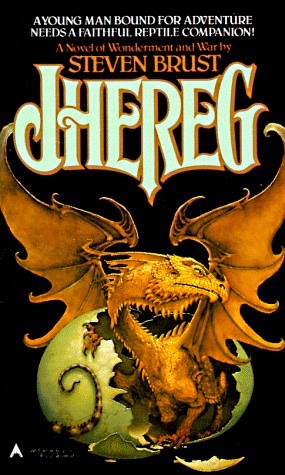
The Blog Fantastic 027: Jhereg review

Jhereg is a marvelous book. Vlad Taltos might be my new favourite fantasy series and, Steven Brust, my new favourite fantasy author. I have to say I’m astonished that more people do not talk about Brust and his work online. I can't remember when I first heard of him but there were a few people whose judgement I value and whose preferences in fiction usually match up with mine that have written a bit about the Vlad Taltos series. It's thanks to Jo Walton’s articles and reviews on Tor.com that I found and read an interview someone did with Brust which finally convinced me to look for one of his books at my local used book store (Bay Used Books).

I thought he was completely unknown to me before I started to read Jhereg but it turns out I’ve read a short story by him in The Sandman: Book of Dreams, a collection of short stories set in Neil Gaiman’s Sandman comic book series. I remember absolutely nothing about Brust’s story titled “Valóság and Élet” and so I have no idea if I was unimpressed with his story thus explaining why I didn’t remember his name when I heard about his again. I’ll have to go reread it to find out.

You can summarize the story well enough, as long as you don’t go into too much detail. Vlad is a human living in one of the cities of the Dragaeran Empire. The Empire is ruled and mostly populated by people who are descendants of dragons (no, really). He is contacted by one of the crime lords of his House and asked to take on a contract to assassinate a man who has run off with the council’s gold. The novel is about Vlad working on his contract and assassinating his target. That might sound like a tired plot but Brust’s phenomenal world building and hybridization of genres make this novel a memorable read.

Right out of the gate, Steven Brust begins to build a unique series with the prologue of Jhereg. It’s quite wonderful. In fifteen pages he set up his main character, the world and customs of his story. Everything reads well and all of the pieces fall neatly together. It describes a fantasy setting that is a bit unusual but it’s also gripping. I was instantly fascinated with Vlad and his origins. It's a small tale in and of itself. It's about the making of an assassin but it's also more than that. It's also about introducing the world of Dragaera and setting up a few pieces for the rest of the novel. All of this is done, quite masterfully, before the start of the first chapter. 

As much as I want to continue boasting about Jhereg’s uniqueness, I have to admit that its hybrid fantasy as there are many elements from other genres that are a key component of the world Brust has built. You could easily and rather accurately describe this book as being noir-fantasy since, aside from fantasy, the book borrows most heavily from crime and detective novels. The first indication of this is the use of first person narration which is used to good effect for world building (as I’ll explain below) but also gives the book a different feel from most fantasy novels as of the first page. In Jhereg, Vlad narrates the events as they’re happening or shortly after they’ve taken place but he includes information from the past. Some of that helps explain the world and the story and some of it explains the characters and their relationships but it also provides the reader with information on characters who either don't show up at all or who only play a small role in the book.

You can also see strong influence from noir stories in the main plot of the book. The plot is constructed as a detective story in which Vlad is searching for clues and puzzling together the reason why Lord Mellar stole from the House of Jhereg. In doing so he’s uncovering other secrets about himself and the world he lives in. In the last few chapters of the book the assassination of Mellar is written in a way that reminded me of heist films. The assassination contract he accepted requires a very precise and complicated plan to be a successful assassination. Vlad, along with several other characters, plan the assassination meticulously by pooling together all of their information and personal skill. Naturally, this is followed by the execution of said plan and it’s all very satisfying: as a heist and the climax to a fantasy novel. Brust carefully planned the entire book in such a way that all of the elements work to reinforce each other. To understand the detective and heist plots of the book you first need to understand the world in which the story takes place. The catch is that you’re learning about the world at the same time that Vlad is discovering clues about his target and the role his assassination will play in the political setting of Adrilankha City. It’s a delightful cycle of plot, world building, informative narration, and character development which results in a powerhouse climax. Not a word is wasted.


World Building and Structure:
It’s difficult to recall a book in which the narrative and the plot were so intrinsically tied into the world building. They’re so intertwined as to be nearly inseparable. Brust uses first person narration to good effect. Vlad explains certain things to the reader and it works well as exposition because it’s not hiding it exclusively in dialogue or information dumps by an omniscient narrator. Sure, there are some information dumps in dialogue, one particular chapter where Vlad talks to Aliera e’Kieron and the history of Dragaera is presented to Vlad is a chapter devoted almost entirely to exposition and world building. However, for the rest of the novel it’s handled quite well. Brust also uses the first person narration as a way to give us better insight into Vlad’s character and personality. He’s a fascinating protagonist, capable but not invincible. His mind and abilities as a tactician are as important as his skills in sword fighting and witchcraft.

By informing us of the seemingly impossible assassination job the reader is also being informed of the world and the history of the Dragaeran Empire. Brust does this because of his fusion of the detective novel genre with fantasy. By uncovering clues on how to locate and kill his target, Vlad is also uncovering secrets of the world in which he lives. The fact that a lot of what Vlad discovers in the novel is equally new to him as it is to the reader, the reader is not only invested in the plot but is playing a similar role as Vlad. We’re being presented the pieces of the puzzle and we can make sense of it along with the novel’s protagonist. By better understanding the world you get better appreciate the severely difficult situation Vlad is in. The knowledge you gain of Dragaera throughout the book will also help you understand the villain’s motivations and the outcome of the story. In order for the world building to be effective (or for it to matter to the reader) and for the detective story to work, they need to work hand in hand. It’s a skilfully constructed novel but it never reads that way. Brust is quick and sneaky in his storytelling which worked superbly well with this book.  


Sorcery and Witchcraft:
There are two types of magic in the world of Dragaera: sorcery and witchcraft. There are quite a lot differences between the two arts along with a few similarities. For example, sorcery can only be done alone while witchcraft can be done alone or with more than one person. When it is done with more than one person their psionic strength is pooled together then shared equally amongst the participants in the magic. Being assisted by someone during a witchcraft spell can be as much of a hindrance as aid. If someone’s psionic abilities are too strong in comparison to the others involved, it can burn them out and cause serious harm.

Between the two, sorcery is the most familiar as it’s the kind of magic people typically imagine when they think of fantasy. Sorcery is used by tapping into a pool of Chaos, something all people of the Dragaeran Empire can tap into because of their link to the Imperial Orb. To do a spell you need to connect yourself to the Orb and use its chaos energy to fuel and direct your magic.

What’s really interesting though is witchcraft. Witchcraft gets its power from the psionic strength of the person practicing the spell. It’s often ritualistic and it can also be improvisational to a degree. It more closely resembles the kind of magic people discuss in the real world. I was reminded of the ritualistic and trance aspects of magic found in the writings of Grant Morrison, particularly in The Invisibles. It’s very different from the rigidity and detail of magic which you can find in the works of Brandon Sanderson. It’s refreshing and interesting because it’s not something we see often but more importantly it works well within the context of the story and the world Brust has thought up.

Before I wrap this up I want to point out the one element that I found frustrating. The Dragaran Empire is divided into 17 Great Houses of lords and ladies. They are all named after animals. Some are named after mythological creatures while others are named after animals found on Dragaera. J
hereg is one example (what’s a jhereg? It’s a small dragon-like creature with a venomous bite and the ability to speak psionically). Apparently a lot of those animals are based on real world animals but we’re never given a description of most of them! What’s a teckla? I have no fucking clue but it’s mentioned numerous times in this book. I might be a small lizard or something? Maybe a small rodent? I know it’s small. The lack of description of the House animals is frustrating because the members of those Houses embody characteristics of the animals after which their House is named. Brust side steps this a bit by having the book start with a poem that describes some of the qualities of those animals but I feel like there is still a component missing that could easily have been added to the books. It’s the one instance of ineffectual world building that stuck out.


There are many elements found in Jhereg that aren’t new to the fantasy genre or other genres, for that matter. Some of these elements weren’t even new at the time of the book’s original publication but Brust incorporates all of these elements with his own style and makes them sing. The pariticularly interesting world building has the effect of rounding out the book’s tone and style. Add to that Brust’s ability to be very precise with his words and you have a sweet, slim, book. It’s not just short by today’s standard 500+ fantasy novels. AT only 239 pages, Brust gets to the point without rushing anything and it makes for a very satisfying read. Published in 1983, Jhereg is Brust’s first published novel and his first published work, as far as I can tell from my research. That’s amazing! If someone has a list of impressive debut novels I would like to see where Jhereg ranks because I was immensely impressed by this book. There is just so much to love and even though I’ve spend quite a bit of time praising it I’ve also left out a very considerable amount of cool things but being such an incredible book I think you should find a copy for yourself and dig in.


Considered it Covered:
There are quite a few things to enjoy about Steve Hickman’s cover. The detail in the jhereg’s scales is particularly impressive. I also like the little horn he has, something he has on his snout for the purposes of breaking through his egg. The colouring is also very effective, including the use of a solid black background. It’s a simple image, yes, but striking nonetheless. There are only two things I’m not completely sold on though and they are the stripes on the tail and the overly stylized shape of the wings. I can’t help but feel that the tail shouldn’t be striped because it clashes with the solid coloured body of the rest of the jhereg. It also looks like the orange/gold colour of the rest of the body is absent in the tail but that could also be the shading playing tricks on my eyes. As for the wings, they’re aesthetically pleasing but come on, there is no way an animal would have wings like hta.t They don’t look very functional and their curvature is too exaggerated. It kind of looks like an animal that has long stopped using its wings for sustained flight and now only uses them on occasion. I guess I’m not sold on them because they look impractical as wings. Oh well, it’s actually a small complaint at this point because the rest of the cover, particularly the jhereg’s forelegs, neck and head, are just stunning and skilfully detailed. 

Wednesday, 17 September 2014

Miscellaneous Reviews 10: Gaston Lagaffe and Tintin


Gaston Lagaffe vol. 18: Gaffes en pagaille review:
If you’ve ever read a volume of collection gags starring Gaston Lagaffe, you’ll know what to expect in this volume. It’s a collection of joke strips by creator Franquin (famous for his run on Spirou et Fantasio and for creating Gaston and Marsupilami). The Gaston Lagaffe gags originally appeared in Spirou magazine (as far as I know, anyway) and the albums are collections of those serialized gags. This is one of the volumes published after Franquin’s death in 1997 and it collects some of his last Gaston Lagaffe related work. The first half or so of this volume is made up of assorted full page, one panel gags and various pages made up of four “costume” gags (in which Gaston shows off an elaborate, funny or awful costume for a costume party, only to reveal he’s worried about his ability to dance while wearing said costume). It makes for an unusual read considering I’m used to reading half page or full page gag strips but they still manage to delight and provide humorous entertainment.

The quality of the jokes and the quality of the art and storytelling vary a lot. Unlike previous Gaston Lagaffe albums this one is a mishmash of gags selected from various periods throughout the character’s publication. All serious fans of Gaston Lagaffe know that the albums have a complicated publication history and it’s been common to see old and new gags present in albums before but this takes it to a whole new level. Once you get past the halfway mark though, the volume settles into the regular format of one page gag strips. It’s a good collection of gags but the shift in the type of jokes from the first and second half is a little jarring, if only because the first half feels so light and somewhat insubstantial. Not so much because of the quality of the art and the jokes themselves but mostly because this volume isn’t any larger previous Gaston albums and I was getting worried that it would make for an incredibly short read. I was delighted to see that the book changed to its regular format later on in the same volume.

As for the jokes themselves, they’re good. They’re not all great but they’re entertaining and well executed for the most part. As much as dislike the variation in style of the gags in this collection, it allows for an interesting comparison of which format Gaston Lagaffe works best. I enjoyed the single page or single panel jokes but for me, I really prefer the half page or full page strips. I also want to point out that I don’t think this is a good album to introduce new readers to the series. Most of the jokes will still work while other jokes will lack a certain depth if the reader is unfamiliar with the characters that show up without introduction. Since they pop up randomly and without any consistency throughout the book, a new reader might think they’re just random characters and not members of the regular cast. If you’re looking for roaring laughs, a more consistent Gaston, or the best of what the series has to offer, I suggest you pick up on of the classic albums. With over fifteen to choose from I doubt you’ll be disappointed.

Seeing a mix of old gags with some of Franquin’s last few gag strips, I can’t help but think that Marsu Production seems to be going about collection Gaston Lagaffe it in all the wrong ways. I would love to see a definitive multi-volume hardcover collection of all Gaston related material. You could include production notes, interviews, and another other assortment of supplementary material. I’m thinking of something that would honour Franquin and what is considered to be one of his best creations. I think Marsu Production could learn a few lessons from the likes of Fantagraphics and IDW, which have done an excellent job reprinting classic comic strips like Charles Schulz’s Peanuts and Berkeley Breathed’s Bloom County, respectively.

My review is based on the French edition published by Marsu Production in 2009.


Les aventures de Tintin: Vol 714 pour Sydney (Flight 714 to Sydney):
One of the series of bande dessinée that I grew up reading was Les aventures de Tintin. To this day I still consider Hergé to be one of the great comics creators but everyone in a while I reread one of his works that makes me doubt it. Vol 714 pour Sydney is one of his more disappointing reads. Unlike many of his earlier works that have suffered a great deal to the critical eye of modern audiences, specifically readers who make claims of sexisms, racisms and other controversial issues, this album exemplifies another one of Hergé’s shortcomings as a writer/artist: sometime he’s down right boring.

This album is boring, not in and of itself, no. It’s boring when compare to other works in the Tintin series. Everything good about this book can be compared to another Tintin story where Hergé did it so much better. The album can be divided into three parts. The first part is all setup but it’s the most enjoyable because, at this point in his career, Hergé is a skilled storyteller and his makes it a considerably good read. Tintin, Milou, capitaine Haddock and Professeur Tournesol are in an airport and nothing appears to be happening but really, what Hergé is doing, is having his very well defined characters interact superbly with strangers and old friends alike. It gives you the sense that yet another excellent Tintin adventure is about to begin.

By the second part of the book though, things start to go downhill. Tintin and his friends end up what can only be described as a run of the mill adventure story. It lacks what made most of Tintin’s adventures interesting: an intriguing situation, intriguing characters, an actual plot. Instead, all we get is Tintin, Haddock and a few other characters running around getting tired up, shot at and beat up. None of it seems to matter because Hergé completely failed to give the reader any reason to be emotionally involved in the story. At this point the reader, like the characters, is just going through the motions.

By the time the third part begins, it’s probably best to just close the book and put it back on the shelf because things get weird. There’s nothing inherently wrong with that. Things have gotten weird in Tintin before to great effect and I happen to enjoy weird stories. The problem with the way things turn out in this story is that it all feels too easy, overly silly, inconsequential to the story and, most important of all, easy and cheap. It’s not only a bad way to continue the story of the album but it’s quite simply a really bad way to end a story. The island one which Tintin and his friends have been on for most of the book turns out to be site that is regularly visited by aliens. Aliens that end up saving the gang from a violent volcanic eruption . . . or did it? The characters don’t remember because they were conveniently hypnotized before the rescue.

I picked up this volume because I was at my parent’s house a few weekends ago and I wanted to read a Tintin story. I grabbed some of my favourites and I also grabbed this one because I didn’t remember much about it. Well, now I remember a great deal too much about it. It’s definitively one of the most disappointing Tintin albums and I really recommend you avoid it, unless you’ve read all of the others and you really want to read all of Tintin’s stories. My only consolation is that I have a small stack of my favourite stories by Hergé sitting in the next room. I’ll have to read a few this weekend to help me forget the mess that is Vol 714 pour Sydney.

My review is based on the French edition published by Casterman in 1993.